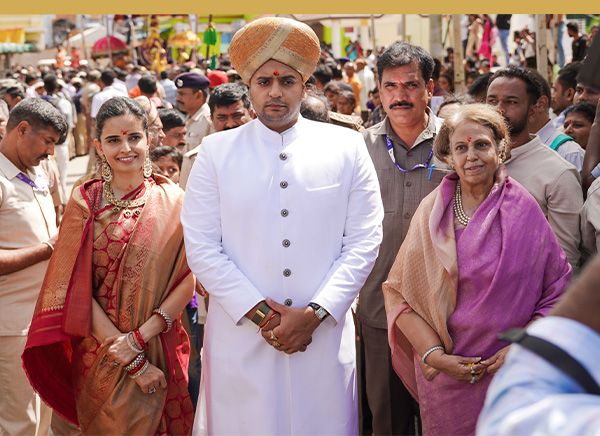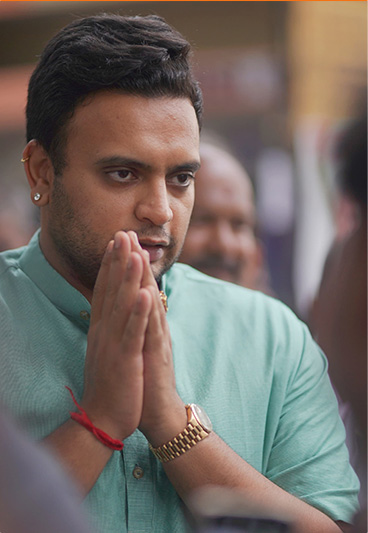
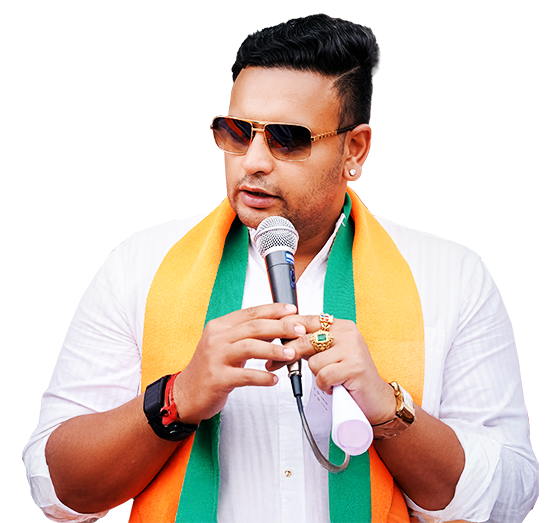

Shri Yaduveer Krishnadatta Chamaraja Wadiyar
Yaduveer Krishnadatta Chamaraja Wadiyar represents a rare and
meaningful confluence of heritage and modern democratic leadership. As
the 27th head of the illustrious Wadiyar dynasty of Mysuru, he is the
inheritor of a legacy that has profoundly shaped the cultural, administrative,
and social fabric of Karnataka.
The Wadiyars are remembered not merely as rulers, but as enlightened
patrons of education, art, industry, and public welfare, who transformed
Mysuru into one of India's finest planned and culturally vibrant cities.
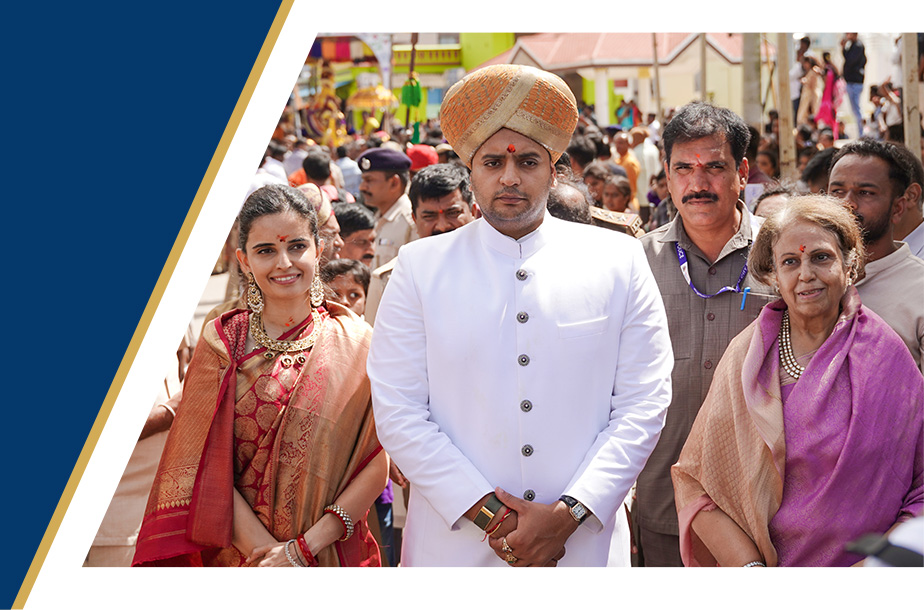
By assuming this responsibility in 2015, Yaduveer Wadiyar became the symbolic custodian of a tradition rooted in service, dignity, and public responsibility.

From Symbolic Leadership to Constitutional Responsibility
Unlike a purely ceremonial role, Yaduveer Wadiyar chose to translate this
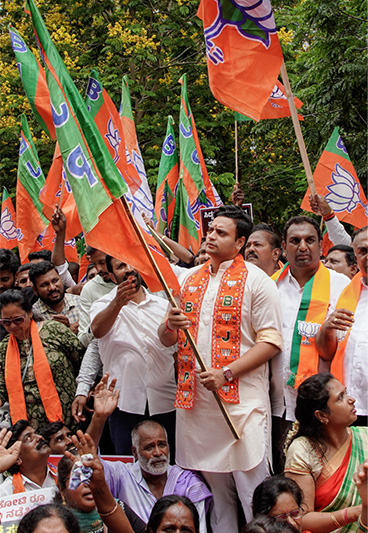
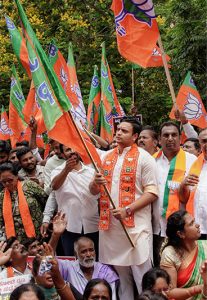
legacy into active public service through democratic politics. His election as
the Member of Parliament from Mysuru-Kodagu marked a significant
transition from symbolic leadership to constitutional responsibility.
It demonstrated his commitment to engaging directly with the aspirations of the people and contributing to nation-building within the framework of parliamentary democracy. This step also reflects the evolution of Indian royalty in independent India - from rulers to representatives, from authority by lineage to legitimacy through the people's mandate.
From Symbolic Leadership to Constitutional Responsibility
Unlike a purely ceremonial role, Yaduveer Wadiyar chose to translate this
legacy into active public service through democratic politics. His election as
the Member of Parliament from Mysuru-Kodagu marked a significant
transition from symbolic leadership to constitutional responsibility.
It demonstrated his commitment to engaging directly with the aspirations
of the people and contributing to nation-building within the framework of
parliamentary democracy. This step also reflects the evolution of Indian
royalty in independent India - from rulers to representatives, from authority
by lineage to legitimacy through the people's mandate.
Developmental Priorities and Governance Vision
As a parliamentarian, Yaduveer Wadiyar has focused on developmental priorities of Mysuru and Kodagu, while also addressing broader national concerns. His approach is marked by a combination of cultural sensitivity and forward-looking governance. He advocates infrastructure development, heritage conservation, tourism promotion, youth empowerment, and the effective implementation of central government welfare schemes. In doing so, he mirrors the historical ethos of the Wadiyars, who believed that prosperity must be inclusive and that development must be rooted in cultural identity.
Infrastructure
Developing modern roads, urban planning, and public utilities.
Heritage Conservation
Preserving Mysuru's cultural identity.
Youth
Empowerment
Education and employment opportunities
Tourism
Promotion
Leveraging cultural assets for growth
Bridging Heritage and Modern Challenges
His royal background lends him a unique moral authority in matters related
to heritage preservation, traditional arts, and the safeguarding of Mysuru's
distinct identity.
At the same time, his role as an MP requires engagement with modern
challenges such as employment generation, digital governance, social
justice, education reforms, and equitable access to welfare schemes.
He bridges these two worlds by positioning heritage not as a relic of the past, but as a resource for sustainable development, tourism, and cultural diplomacy.
Continuity in Public Service
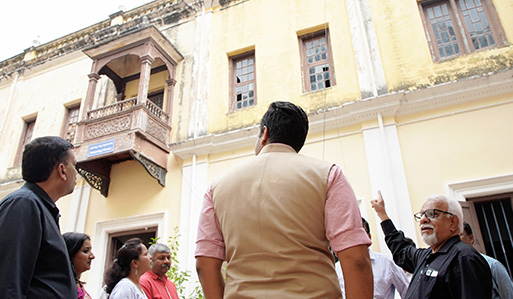
Yaduveer Wadiyar also symbolizes continuity in public service. The Wadiyar dynasty historically invested in institutions that still define Mysuru today-universities, hospitals, irrigation systems, industries, and urban planning.
In Parliament, he carries forward this tradition in a contemporary form by working through policy, legislation, and advocacy. His participation in parliamentary debates, questions, and constituency engagements reflects a methodical and institution-oriented approach rather than personality-driven politics.
What distinguishes him is the restraint with which he carries his royal identity. He neither disowns it nor allows it to overshadow his democratic responsibilities. Instead, he uses it as a source of inspiration and ethical grounding, while letting his work as a parliamentarian define his public image. This balance resonates particularly well in Mysuru, where people cherish their heritage but also seek modern opportunities and governance that is efficient, transparent, and responsive.